

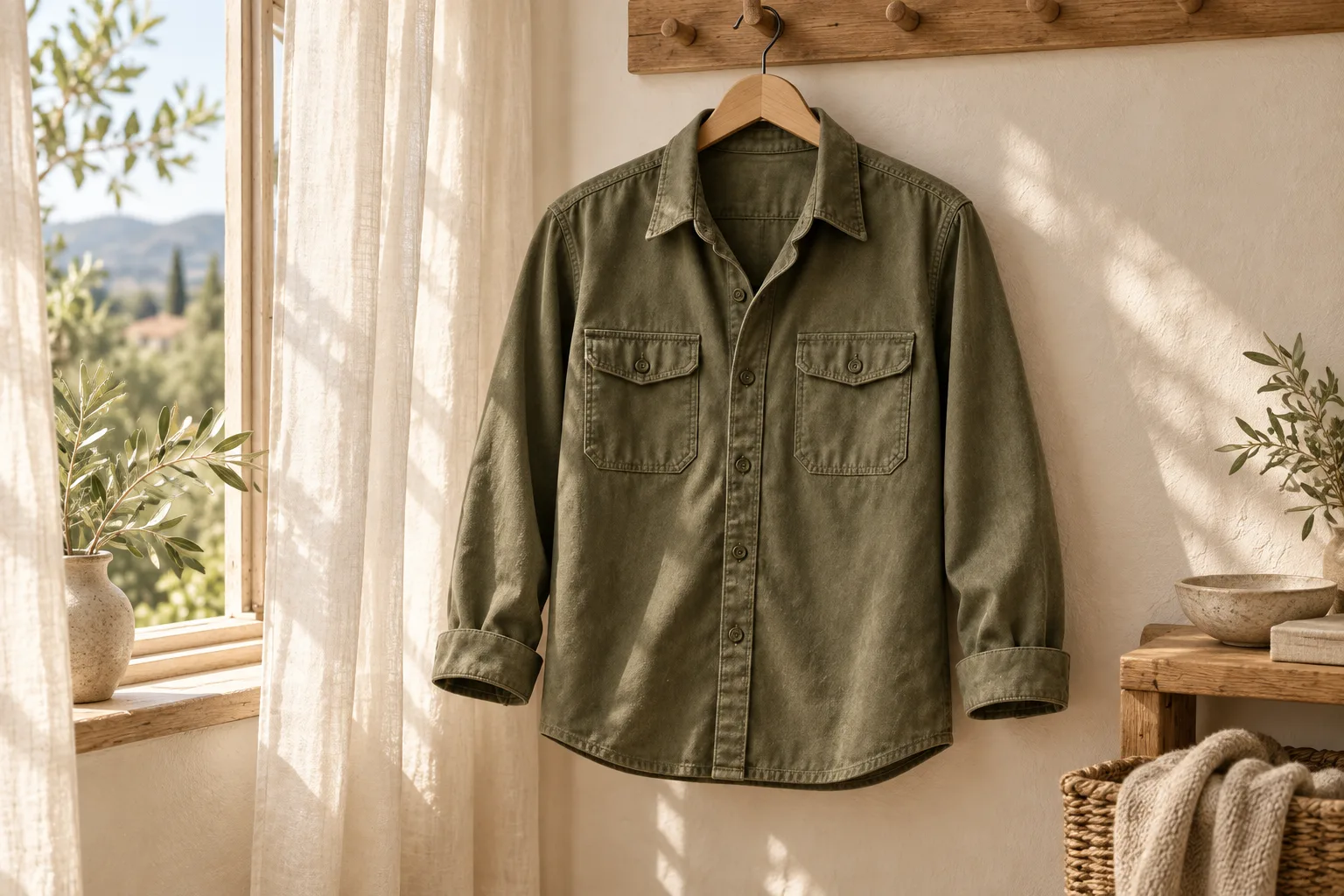
Brushed cotton twill is one of the most forgiving fabrics you can own. It softens with every wash, hides small marks and ages into a color that is hard to buy new. It only asks for a little care.
We tested the Field Overshirt through sixty washes in the studio. Here is what kept it looking right, and what did not.
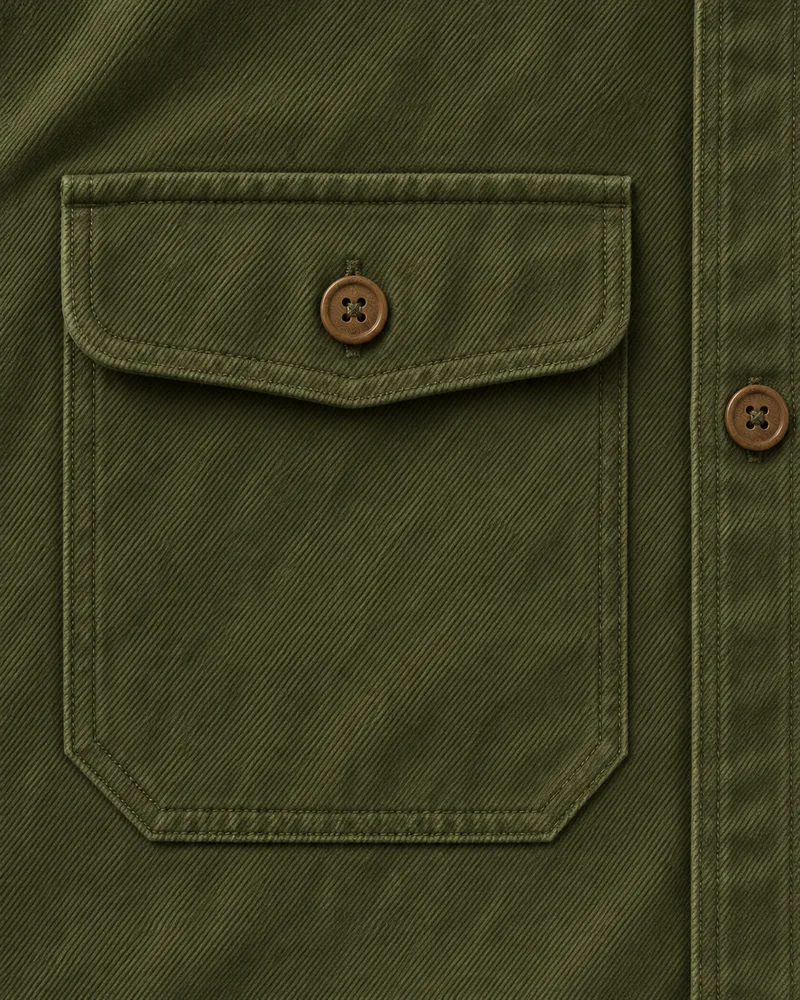
Wash less, and wash cold
Most wear comes from the washing machine, not from wearing. Air it on a hanger after a day out and wash it every four or five wears. When you do, turn it inside out and use a cold, gentle cycle with a mild detergent.
- Cold water, 800 rpm spin
- Close the buttons and flaps first
- No fabric softener: it flattens the brushed surface
Turning it inside out matters more than it sounds. The brushed face of the twill is the part that rubs against the drum and against the zips and buttons of everything else in the load. Inside out, the drum works on the smooth reverse and the surface keeps its nap. Wash it with similar colors, and keep it away from towels and fleece, which shed fibers that cling to a brushed face.
The four-or-five-wears rule is a guide, not a law. A shirt worn over a T-shirt in an office can go a week; one worn to move house cannot. Trust your nose, and let the shirt rest for a day between wears so the fibers recover and small creases drop out on their own.
Use about half the detergent the bottle suggests. Twill is dense, and soap that does not rinse out leaves the fabric stiff and a little gray. If your water is hard, an extra rinse does more good than an extra scoop. For a single mark, do not wash the whole shirt: dab it with cold water and a drop of detergent, leave it for ten minutes and rinse. This works on olive and on stone, where a mark on the cuff shows sooner.
Dry flat, skip the iron
Heat is the other enemy. Shake the shirt out, pull the seams straight and dry it flat or on a wide hanger. The weight of the fabric removes most creases on its own.
A tumble dryer is the quickest way to age cotton. It shrinks the fibers a little each time, sets creases into the seams and wears the brushed surface into small pills along the pockets and cuffs. In our test, the shirts we dried flat measured the same after sixty washes as they did new. The one that went through a dryer every time had lost almost an inch at the hem and looked several years older.
Dry it away from direct sun and radiators. Sunlight fades olive first across the shoulders, and a radiator dries the cloth unevenly, which can set a ripple into the front panels. If you are short on space, a wide wooden hanger by an open window works well: the shoulders keep their shape and the collar dries flat.
Between wears, keep it on a hanger rather than folded in a drawer. Folded twill takes a crease along the pocket line that can need a full wash to drop out.
If you want a pressed look for an occasion, iron it inside out on a medium setting while it is still slightly damp. Pressing the outside flattens the brushed surface and can leave a shine that does not wash out.
Here is the whole routine in one place:
| Step | What we do | What to avoid |
|---|---|---|
| Wash | Every four or five wears, inside out, in cold water | Hot washes, which fade olive and shrink the cloth |
| Spin | 800 rpm, buttons and flaps closed | A fast spin, which presses creases into the seams |
| Detergent | Half a dose of a mild one, plus a rinse in hard water | Fabric softener, which flattens the brushed face |
| Dry | Flat or on a wide hanger, out of the sun | The tumble dryer: 3/4 inch off the hem in our test |
| Press | Inside out, medium heat, slightly damp | Ironing the face, which leaves a shine |
“The best thing you can do for a good shirt is to leave it alone for a while.”
Ewa, head of production
How olive and stone age
Sixty washes sounds abstract. At two wears a week and a wash every four or five wears, it is close to three years in a closet. Over that time the two colors of the Field Overshirt change in different ways, and both for the better.
Olive goes deeper and a little browner, most of all along the seams and pocket edges, where the brushed surface wears down towards the weave. Stone moves the other way: it loses a touch of its gray and turns warmer, closer to sand. Neither fades unevenly as long as it dries out of the sun. We wrote more about the lighter color in Stone, the new neutral.

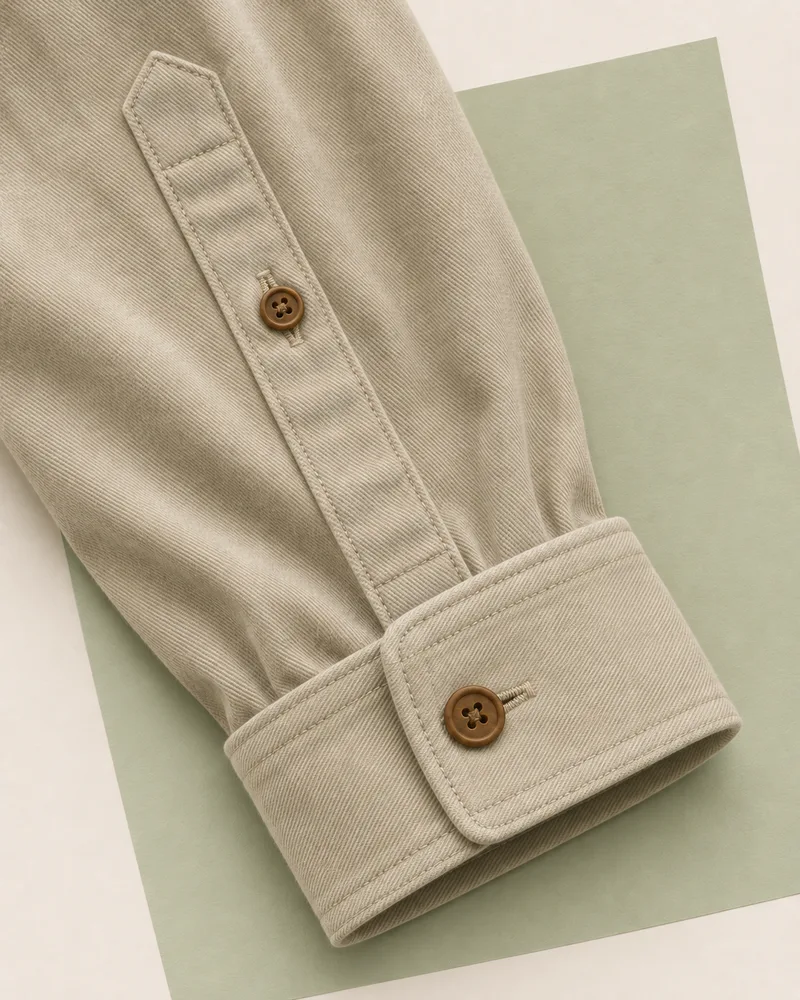
What does not change is the shape. The seams are flat-felled, so there is no raw edge inside to fray, and the shirts we dried flat still measured true after the last wash. If you are curious how those seams are made, we spent a day at the workshop in Łódź where every overshirt is sewn.
-
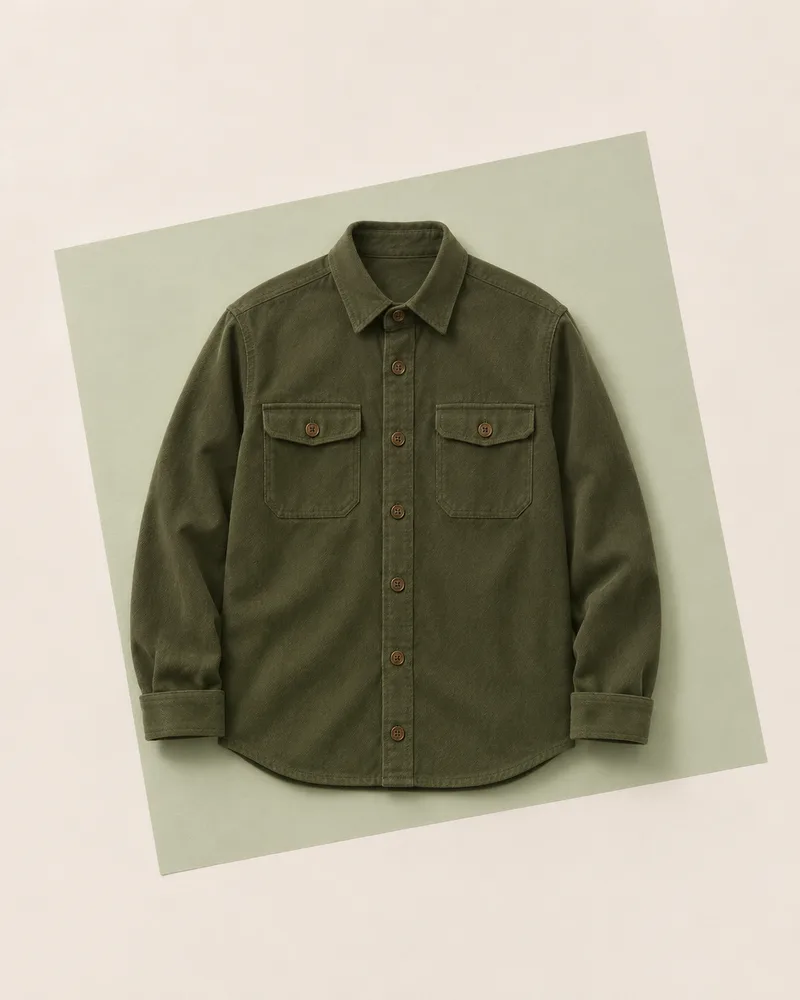
Shop the story
Color: 2 · Size: 5
$98Ships in 1–2 business days
View: Field Overshirt
Small repairs, early
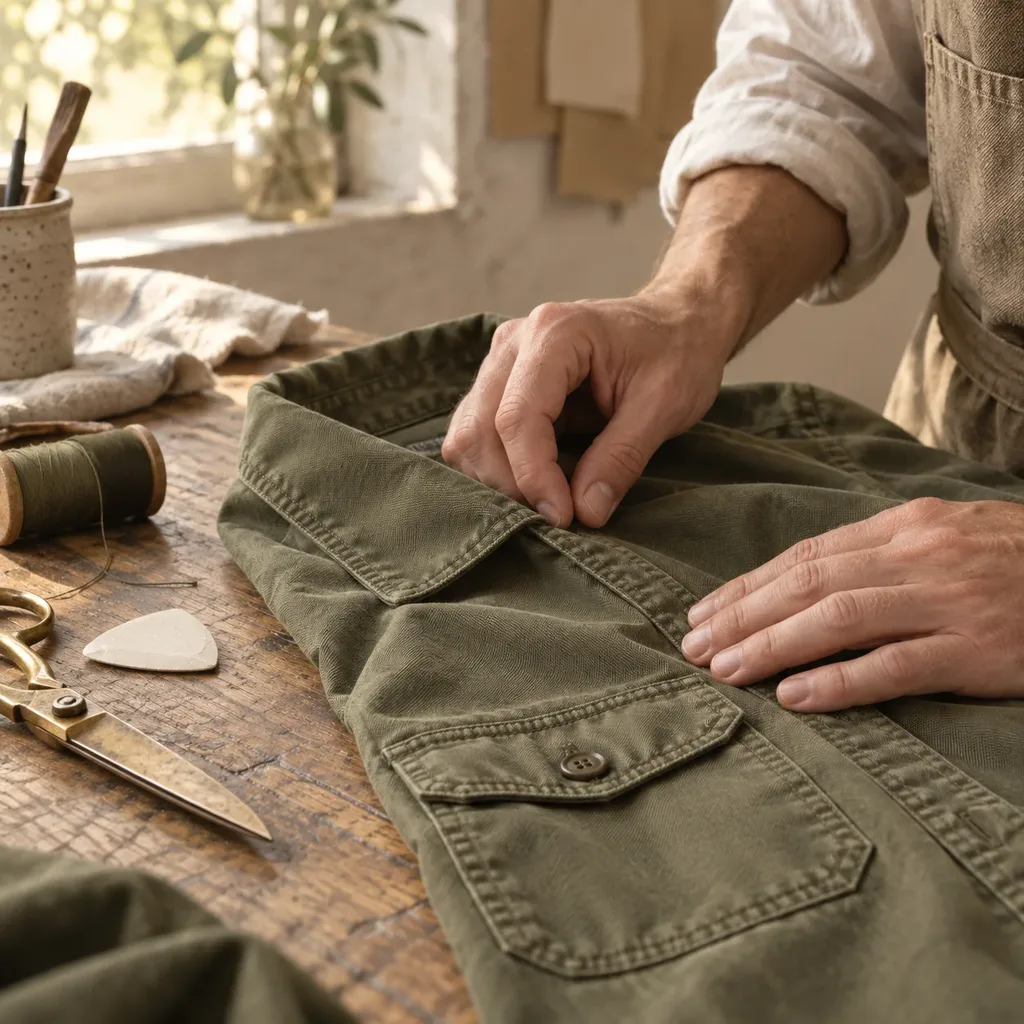
A loose button or a lifted seam takes five minutes today and an afternoon next year. Every overshirt comes with a spare button, and our repair service fixes anything we make, for free, for the first two years.
The places to watch are the ones that work hardest: the pocket corners, the cuff buttons and the lowest buttonhole, which takes the strain every time you sit down. Once a season, run a finger along the seams and check that each button still sits tight. If one has started to wobble, a few stitches through the existing holes will hold it for years.
Keep a small repair kit where you keep your shirts:
- A needle and a length of thread in a matching color
- The spare button from the box, in the envelope it came in
- A small pair of sharp scissors
Anything more than a loose button, such as a torn pocket, a split seam or a worn cuff, is worth sending back to us. The team knows how the shirt is built, uses the same thread and can replace a worn part with cloth from the same batch, so the repair is hard to spot.
Most of this comes down to doing less. Wash less often, leave out the dryer and the iron, and fix things while they are small. A twill shirt looked after this way does not so much wear out as wear in.
2 responses
Author
Does the same apply to the stone color? Mine picked up a mark on the cuff.
Author
Yes. For a single mark, dab with cold water and a drop of detergent before washing the whole shirt.
Comments are closed.