

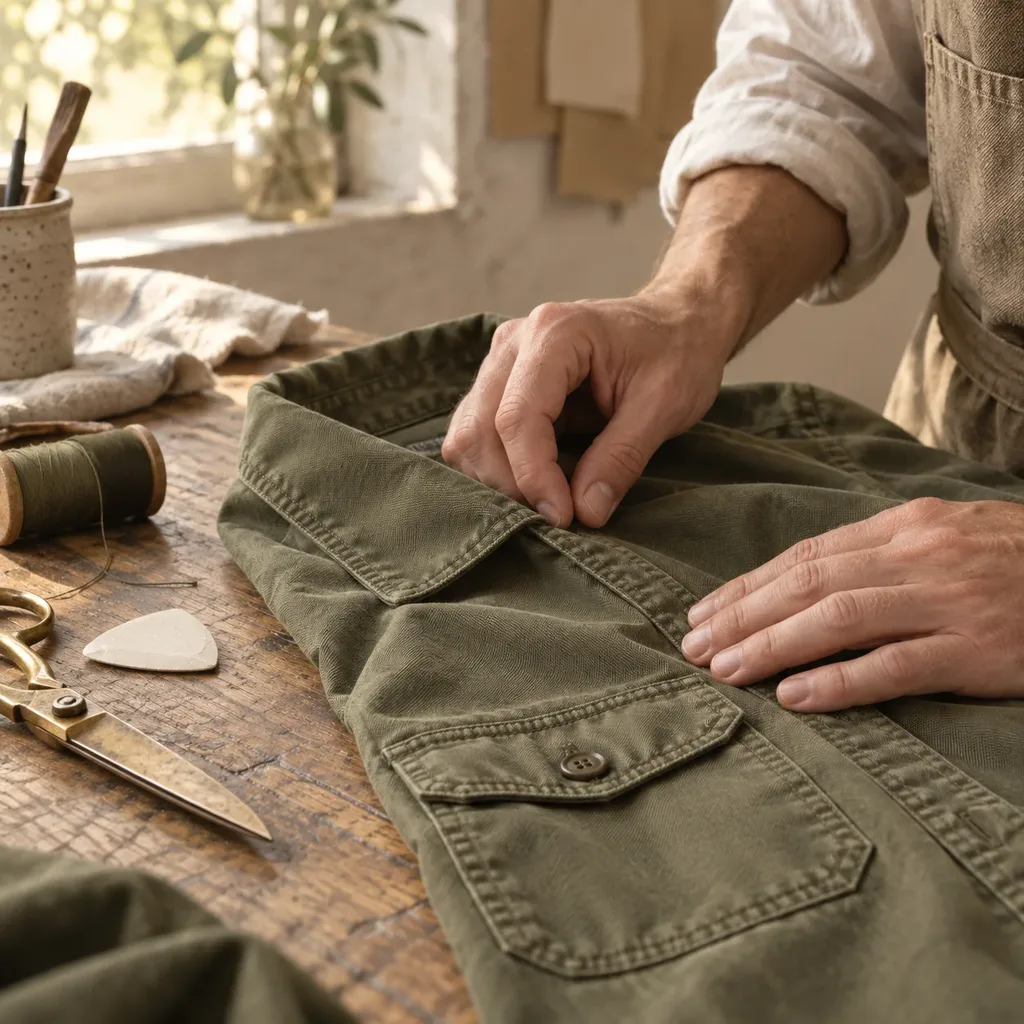
The Field Overshirt is made in a two-room workshop on the first floor of an old textile building in Łódź. The windows face north, which the team likes because the light stays even all day. There is a cutting table, six sewing machines, a pressing station and a shelf of olive and stone twill rolled up like carpets.
We have worked with this workshop since the first overshirt in 2019. It is one of the six partner workshops we use in Poland, and the one we visit most. In early September we spent a day there, from the first cut in the morning to the last buttonhole in the evening.
Forty-two steps
Counted properly, the overshirt takes forty-two steps from roll to box. Most are small: notch a seam allowance, fold a pocket flap, press a collar point. None of them can be skipped, and a few of them take longer than you would expect.
The twill arrives from a mill in the south of Poland in fifty-yard rolls. It is 9 oz organic cotton, woven and then brushed on one side, and each roll rests unrolled on the table overnight before it is cut, so the cloth relaxes and does not shrink back after cutting.
The weight was a long argument. Lighter twill drapes better on the hanger but wears through at the elbows within a couple of years; heavier cloth lasts for ever and feels like a jacket you cannot take off. At 9 oz it is warm enough to wear open over a T-shirt in October and still soft enough to button up as a shirt.
Halina lays the cloth up twenty layers deep, brushed side down, and cuts the panels for twenty shirts in one pass with an upright knife. Marking a lay takes an hour or more; cutting it takes well under that. The offcuts go into bags labeled by color and roll, which is how a repair two years later can still use the same cloth.
- Laying up and cutting the twill, twenty layers at a time
- Pressing and stitching the two flap chest pockets
- Sewing the collar and collar stand, then turning and pressing the points
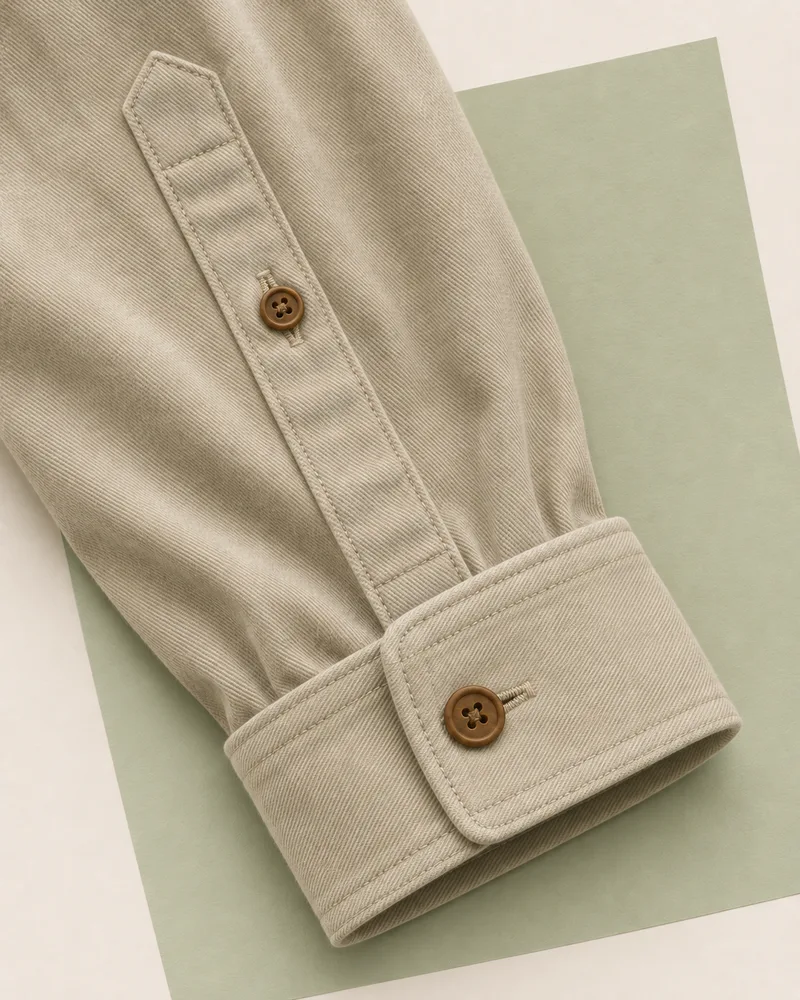
- Joining the shoulders and sleeves with flat-felled seams
- Setting the cuffs and sewing the curved hem
- Cutting buttonholes and sewing on the corozo buttons
- Final press, inspection and folding, with a spare button in the box
The whole shirt takes a little under two hours of hands-on work. A factory making a similar shirt in bulk would spend a fraction of that. The difference is mostly in the seams: every one is either flat-felled or bound, so there is no raw edge inside and nothing to fray after a hundred washes.
The thread is the one part of the shirt that is not pure cotton. It has a polyester core wrapped in cotton, because all-cotton thread wears through at a seam before the twill around it does. The cotton wrap takes the color, so you would never know.
Three people
Halina cuts. She has done it for thirty-one years and still marks every lay by hand with chalk before the blade goes in. She checks the direction of the twill on each layer, because a panel cut against the grain will twist after a few washes and no amount of pressing brings it back.
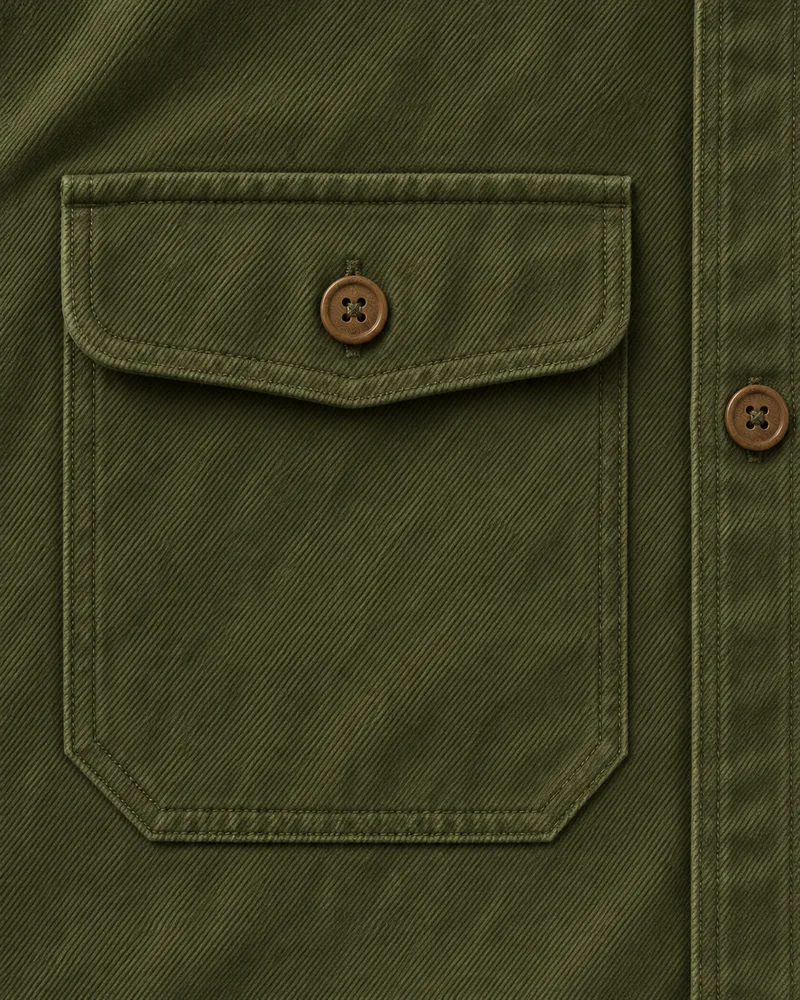
Grażyna sews the body and the pockets. She works fast and talks the whole time, mostly about her allotment. When we asked what the hardest part of the shirt is, she did not hesitate: the pocket flaps, because the point has to line up with the pocket seam underneath and a millimeter out is visible from across a room.
Jerzy does everything after that: collars, cuffs, buttonholes, buttons and the final press. He is the last person to touch every shirt before it ships to Denver, and he rejects roughly one in forty. Those go back to Grażyna, or into the pile of seconds we use for repair parts.
The three of them have worked together for eleven years, and it shows. Nobody drops work on the next table and walks off. They hand it over and say what to watch for.
A day on the floor
The day starts at seven, with the radio on low and the kettle on. Halina is usually first in, because the cloth she laid out the evening before has rested overnight and is ready to mark. By half past nine the first bundle of cut panels, tied with a strip of twill and a paper ticket, is on Grażyna’s table.
The ticket travels with the bundle all the way through the workshop. It names the color, the size and the roll the cloth came from, and each person initials it when their part is done. When a question comes up months later, about a seam or a shade, the ticket tells us who sewed the shirt and which roll it was cut from.
The pocket flaps are where we stood longest. Grażyna folds each flap over a card template, stitches it, trims it, turns it and presses it again before it goes anywhere near the shirt. A flap that is a millimeter out at the point gets unpicked, not eased.
Lunch is at twelve, eaten at the cutting table once the cloth is cleared away, and nobody works through it. The afternoon belongs to Jerzy: collars and cuffs first, then the buttonholes, which he leaves until last because the machine is loud and the others have usually gone home by then.
One very old sewing machine
In the corner of the second room there is a cast-iron felling machine older than anyone who works there. It sews two parallel rows of stitching in one pass and folds the seam as it goes, which is how the flat-felled seams on the sleeves and sides are made. Newer machines can do the same job, but none of them feed heavy twill as evenly, and Jerzy keeps it running with a tin of oil and a set of spare parts he has collected over the years.
We asked Ewa, who runs production for us and visits every few weeks, why we do not ask the workshop to replace it.
“Because the seams it makes are better. When that stops being true, we will talk about it.”
Ewa, head of production
The last pair of hands
Before a shirt is folded, Jerzy turns it inside out and goes over it on the pressing table. He is not asking whether it is well made in general. He has a short list, and he checks it on every shirt:
- Both pocket flaps line up with the pockets beneath them
- The collar points are the same length, to the millimeter
- Every seam lies flat, with no loose threads or skipped stitches
- The buttonholes are clean, and every button sits on a short thread shank
- Body length and chest are within a quarter inch of the pattern
A shirt that fails goes back with a note on the back of its ticket saying what to fix. One that passes is pressed a last time, folded around a sheet of card with the spare button in a small envelope, and boxed for the courier.
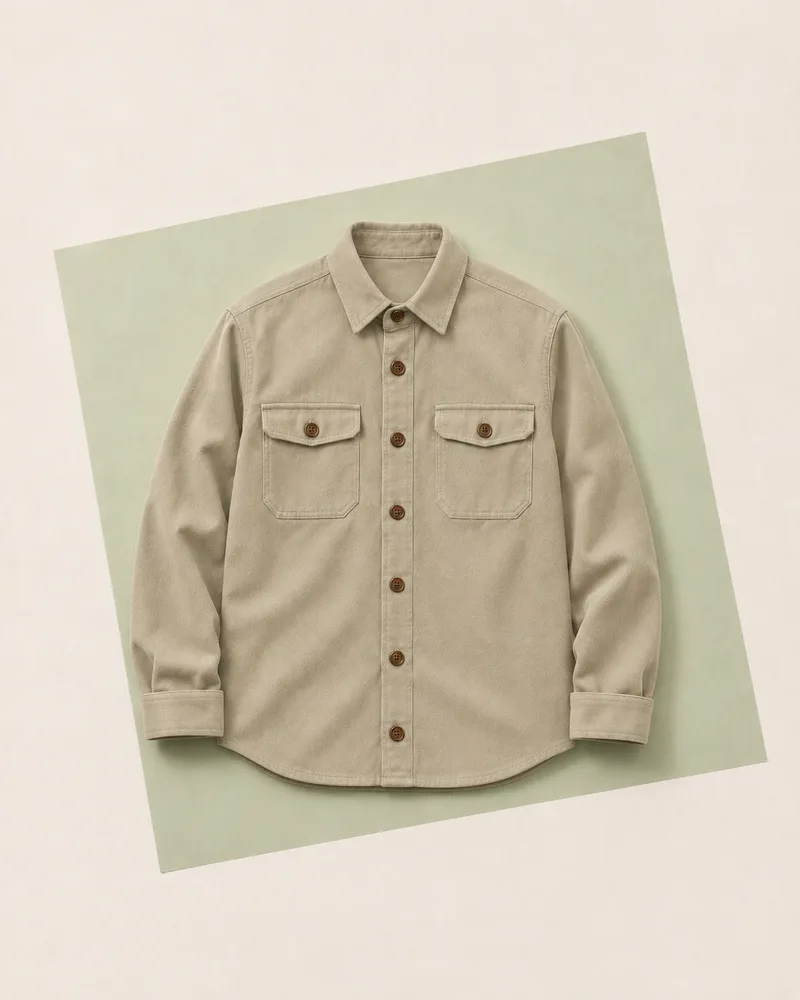
Why we stay small here
The workshop makes around forty overshirts a week for us, alongside work for two other small brands. We could ask for more. We do not, because more would mean either a second shift or a second workshop, and both would change the shirt in ways we are not willing to accept.
A second shift would mean new people learning the shirt under pressure, and the pocket flaps are not something you learn in a week. A second workshop would mean a second way of doing everything, however carefully we wrote it down. We have explained the thinking behind this in Why we make fewer things; this workshop is what it looks like in practice.
Keeping runs short also means we can fix things quickly. When we decided the chest pockets sat a few millimeters too high, the new pattern reached the cutting table within a month. When a batch of buttons came in slightly too thick for the holes, Jerzy noticed on the first shirt and nothing left the building.
It also means we know the people who make what we sell. That matters most when something goes wrong. Worn cuffs and torn pockets that come back through our repair service are often mended with offcuts from the same rolls Halina cut the shirt from.
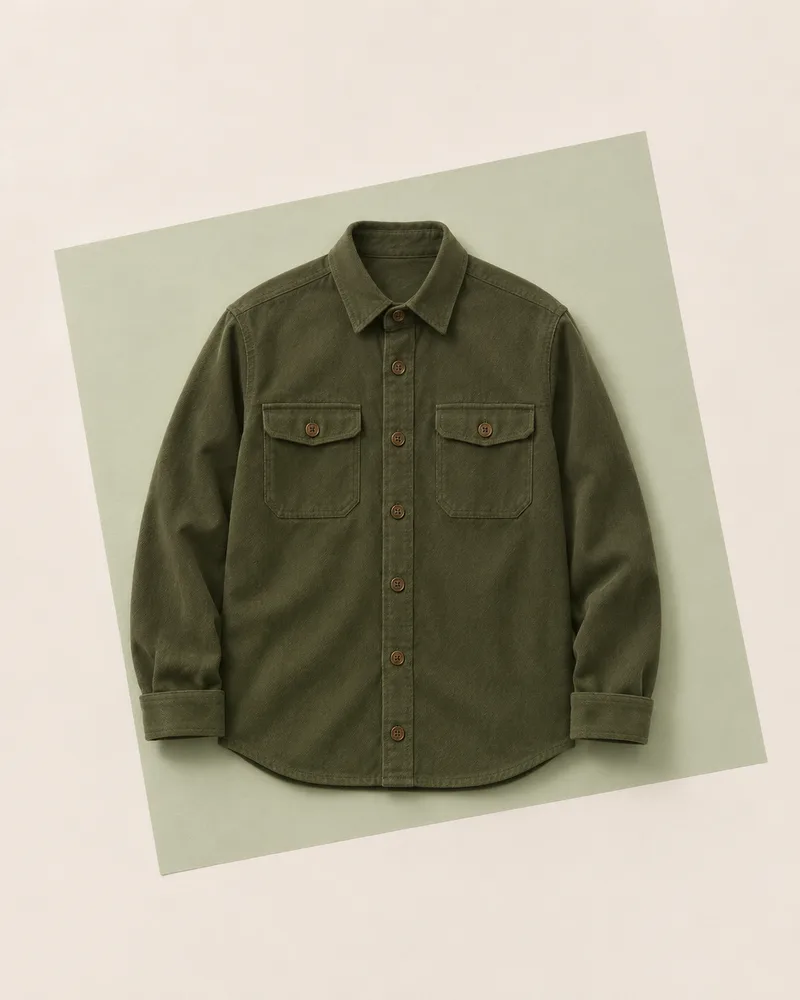
If you own a Field Overshirt, it passed through these three pairs of hands and that old machine. We hope that is worth knowing the next time you wash it.
-
Shop the story
Color: 2 · Size: 5
$98Ships in 1–2 business days
View: Field Overshirt
Quick answers
Can I visit the workshop?
It is a working floor in a shared building, so not on your own. Once a year we bring a small group of customers for a morning with the team, and the newsletter says when.
Is everything you sell made here?
No. For us, this workshop makes the Field Overshirt and nothing else. Most of the rest of the range comes from our other partner workshops in Poland, each chosen for the one thing it does well.
What happens to the seconds?
Shirts that cannot be put right without it showing are taken apart for repair parts: pocket flaps, cuffs and collars cut from the same rolls as the shirts they will mend.
3 responses
Author
Forty-two steps for one shirt. I will look at the flat-felled seams on mine differently now.
Author
Do you ever run visits to the workshop?
Author
Twice a year, in spring and fall, for small groups. We announce the dates in the newsletter a month ahead.
Comments are closed.