
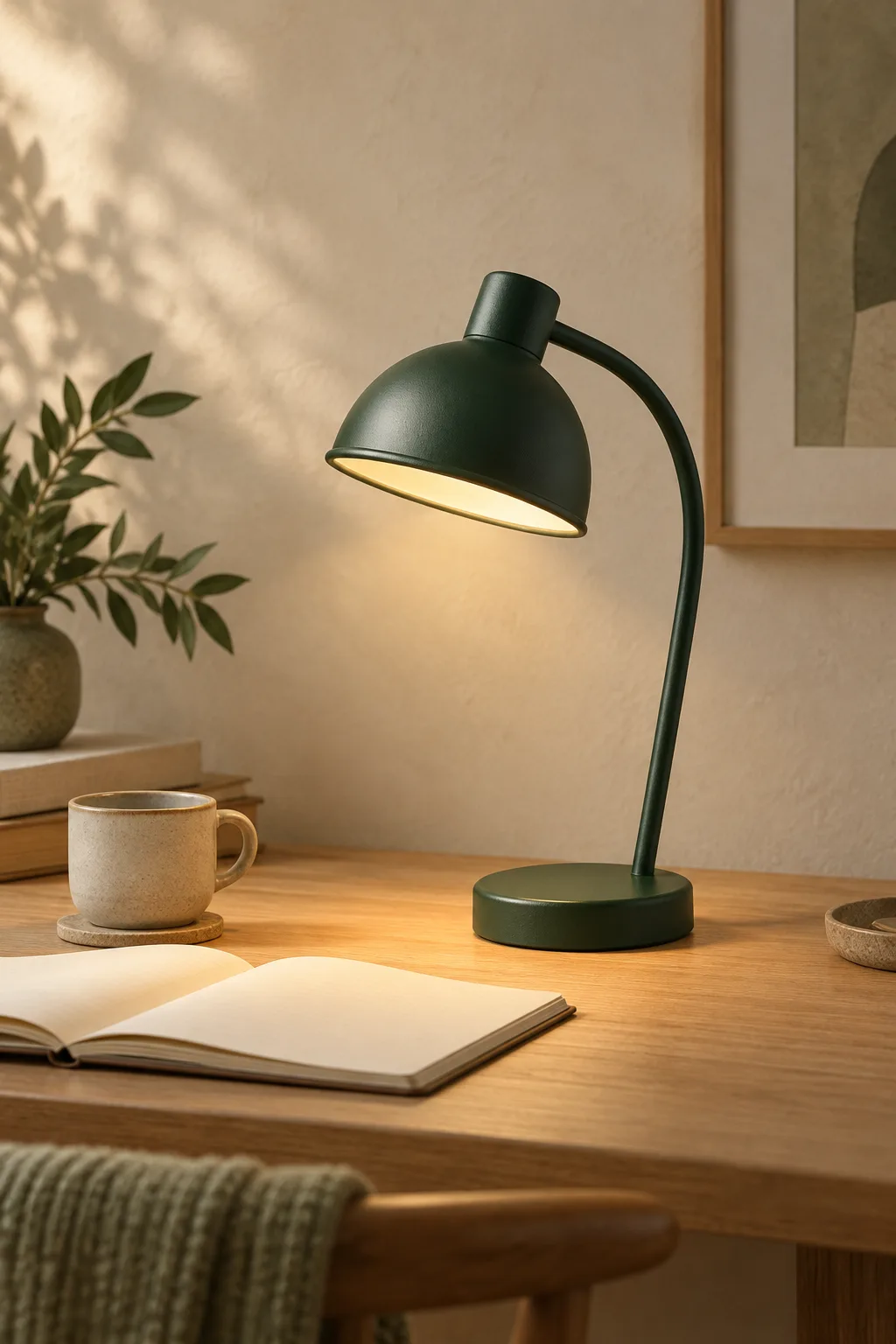
By nine in the evening, most of us are still at a screen of some kind. The work runs late, the emails catch up with you after dinner, or the desk simply becomes the place where the day ends. If your eyes feel dry and heavy by then, the problem is often not the screen. It is the light around it.
We spent last winter moving lamps around the studio and asking people how their eyes felt at the end of the day. The answer came down to three words: warm, low and to the side.
Warm
Light has a color, measured in kelvin. Daylight at noon is around 5500 K and looks white or slightly blue. A candle is around 1800 K and looks orange. Most ceiling lights and cheap LED bulbs sit somewhere around 4000 K, which is fine for a kitchen at lunchtime and harsh at night.
| Light | Color | After dark |
|---|---|---|
| Candle | 1800 K | Cozy, too dim to work by |
| Filament bulb | 2700 K | Warm and easy on the eyes |
| Ceiling lights, cheap LEDs | 4000 K | Harsh |
| Noon daylight | 5500 K | Wakes you up |
Check the box before you buy. The color temperature is printed on almost every bulb, usually next to the wattage, and it is the most useful number on it.
For evening work, choose a bulb at 2700 K or a little below. It is the color of an old filament bulb, warm without being orange, and it tells your body the day is winding down rather than starting again. Your screen should follow: most laptops and phones have a night setting that shifts the display towards warmer colors after sunset. Turn it on and leave it on.
Low
The second rule is height. A light above your head spreads across the whole room and into your eyes. A light at desk height, with the shade pointed down, puts a pool of light on the page or keyboard and leaves the rest of the room softer.
The shade matters as much as the bulb. You should not be able to see the bulb from where you sit. If you can, the lamp is either too high or tilted too far up, and your eyes will spend the evening adjusting to a bright spot at the edge of your vision.
Brightness matters too, and more is not better. For reading and writing in the evening, around 300 to 450 lumens from a desk lamp is plenty. A lamp that dims in steps lets you start brighter at seven and turn it down as the room gets darker around you.
To the side
The last rule is position. Put the lamp to one side of the desk, opposite your writing hand, so your hand does not cast a shadow over what you are doing. If you are right-handed, the lamp goes on the left.
Keep it to the side of the screen as well, never behind it or directly in front. A lamp behind the screen puts a bright light in your eyeline. One in front bounces off the display and washes it out. From the side, it lights the desk and the keyboard without touching the screen at all.
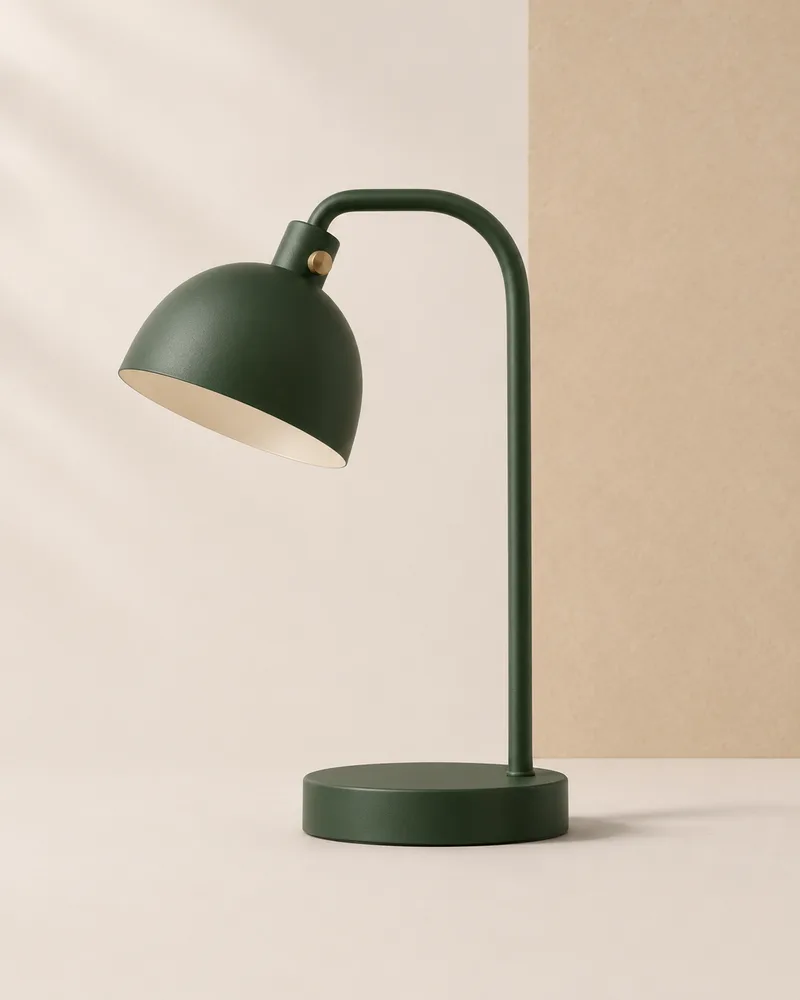
We designed the Arc Desk Lamp around these three rules: a 2700 K LED, a shade that hides it and a curved arm that sets the light low and to one side.
-
Shop the story
$129Ships in 2–3 business days
View: Arc Desk LampOut of stock
Do not work in the dark
One desk lamp in an otherwise dark room is almost as tiring as no lamp at all. Your eyes keep adjusting between the bright screen, the lit desk and the dark room beyond, and that constant adjustment is what makes them ache.
The fix is a second, soft light somewhere else in the room. It does not need to be bright or close. A floor lamp in a corner, a small lamp on a shelf or even a string of warm lights behind a bookcase is enough to lift the background and take the edge off the contrast.
Here is the setup we use in the studio in the evenings:
- A desk lamp at 2700 K, to the side and below eye level
- One soft light elsewhere in the room, kept on
- Screen brightness turned down to roughly match the desk
- Night mode on every screen from sunset
- The ceiling light off
None of it costs much, and you will notice the difference by the end of the first week. If you are setting up a desk from scratch, our guide to a desk that works as hard as you do covers the rest.

And when the work is done, switch the desk lamp off first. It is a small signal, but a useful one: the desk is closed, and the evening is yours.